
Taylor Wright Girlfriend: the Relationship and Murder Case
The killing of Taylor Wright drew national attention not only because of the circumstances of her death, but also because of the people closest to her during her final months, including her girlfriend, Casandra Waller. Wright was a former police officer and private investigator whose disappearance from Pensacola, Florida, became a homicide investigation that exposed a complicated web of friendship, money, trust, and personal upheaval.
At the time she vanished, Wright was navigating major changes in her private life. She was separating from her spouse, establishing a new home life, and pursuing her work as a private investigator. Her relationship with Waller was part of that transition. Waller became an important figure in the investigation because she was Wright’s live-in girlfriend and the person who reported concerns when Wright’s communications became unusual.
Who Was Taylor Wright’s Girlfriend, Casandra Waller?
Casandra Waller was Taylor Wright’s girlfriend and live-in partner at the time Wright disappeared and was later found murdered. Waller reported Wright missing after receiving an uncharacteristic message indicating that Wright needed space, a development that caused alarm because it did not appear consistent with Wright’s usual conduct or with the couple’s circumstances.
Public accounts have described Waller as a school administrator in Escambia County, Florida. Her name became widely associated with the case because Wright had been preparing to build a shared life with her when she vanished. The relationship was reportedly serious enough that the women were living together or in the process of consolidating their household. Wright’s disappearance therefore immediately affected Waller both personally and practically, as she was among the people most aware that Wright’s absence was out of character.
Investigators initially examined Wright’s inner circle broadly, as is standard in a missing-person case involving a sudden break in routine. Waller was reportedly considered a person of interest during the early stages, though being identified as a person of interest does not establish responsibility for a crime. The scrutiny reflected her proximity to Wright, the unusual nature of the message received after Wright disappeared, and the need for detectives to determine who had contact with the victim before she went missing.
Authorities ultimately established that Ashley McArthur, a friend of Wright’s, was responsible for the killing. McArthur was later convicted in connection with Wright’s death. The conclusion shifted the central focus away from Waller and toward the financial dealings and personal relationship between Wright and McArthur. Evidence presented in court tied McArthur to the crime and outlined a plan in which Wright was lured to a rural property before being killed.
Waller’s role in the public record is chiefly that of Wright’s partner, a person left to confront the disappearance of someone with whom she had planned a future. The case placed an intensely private relationship under public examination at a time of profound grief. While coverage often emphasizes the investigation’s dramatic turns, Waller’s connection to Wright remains significant because it helps explain why the initial message and Wright’s sudden silence were treated as so concerning.
Taylor Wright’s Life Before her Disappearance
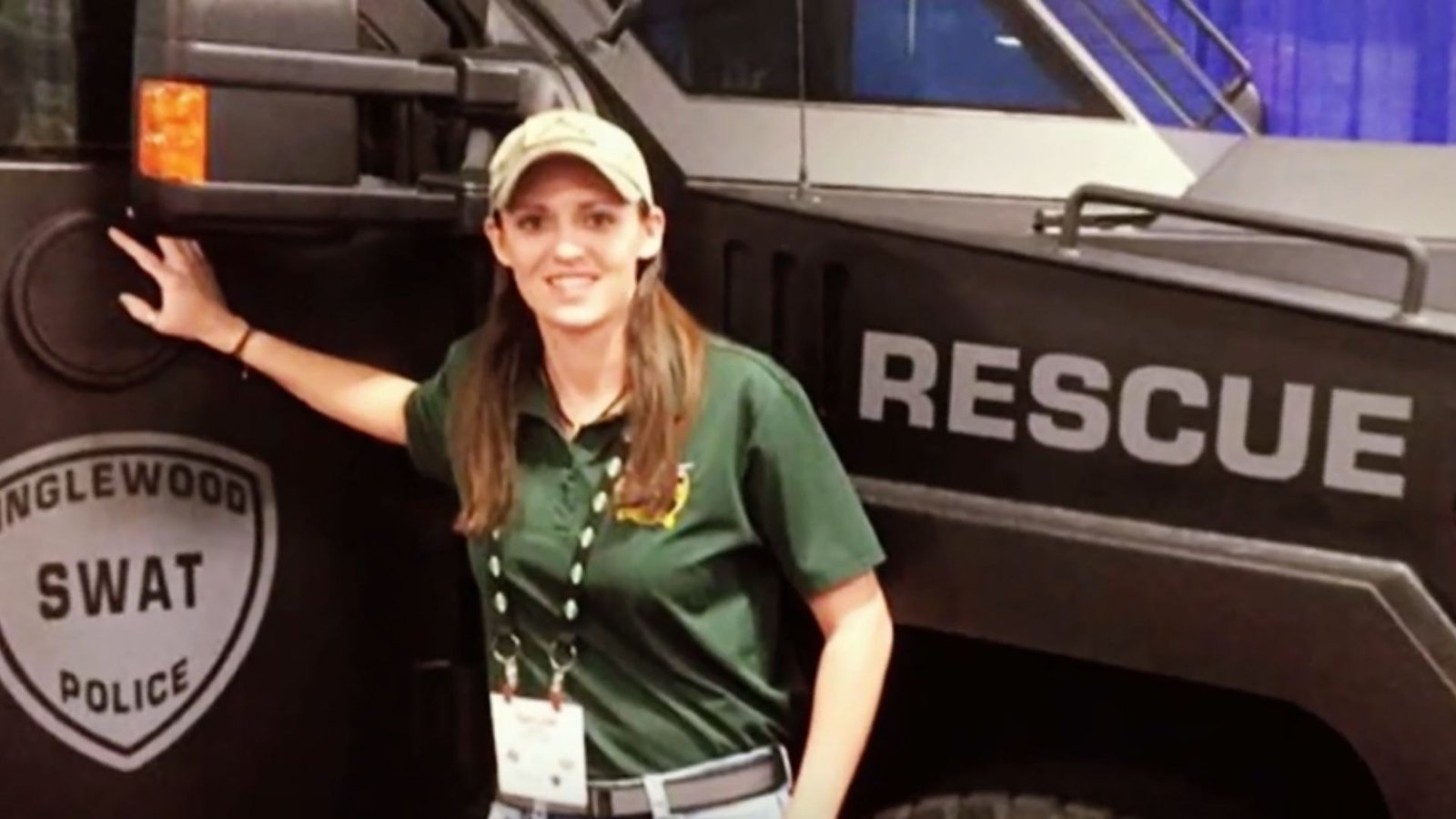
Before becoming a private investigator, Wright worked in law enforcement. Her background as a police officer gave her professional experience with investigations, evidence, and the practical realities of criminal cases. Friends and family accounts have portrayed her as independent, capable, and accustomed to handling difficult situations.
Wright was also a mother and was in the midst of divorce proceedings at the time of her disappearance. Those overlapping personal pressures made the period especially consequential. She was trying to create stability for herself while managing family responsibilities and a changing romantic relationship. Her relationship with Waller was reportedly a new and meaningful chapter in her life, one that coincided with plans to move forward after the end of her marriage.
Her decision to work as a private investigator also connected her to a wide range of people and circumstances. However, the investigation into her death did not establish that a professional case led to her murder. Instead, authorities focused on her connection to McArthur, whom Wright trusted as a friend. That distinction was important: the eventual prosecution depicted the killing as arising from personal and financial betrayal rather than from Wright’s investigative work.
Wright’s background also contributed to the urgency surrounding her disappearance. People who knew her reportedly regarded her as reliable and unlikely to vanish without offering a fuller explanation. A brief message saying she needed space did not provide enough reassurance to those who understood her habits, obligations, and relationship with Waller. Her silence afterward intensified fears that something had gone seriously wrong.
The Disappearance and the Message that Raised Alarm
Wright disappeared after arranging to meet McArthur. At the time, McArthur had possession of a substantial sum of Wright’s money. Court reporting and accounts of the case indicated that the money had been entrusted to McArthur, allegedly for safekeeping while Wright handled her ongoing divorce and related financial matters.
After Wright stopped communicating normally, Waller received a message attributed to Wright stating that she needed space. The message was troubling because it offered little detail and was followed by a continued absence. Waller’s concern led to Wright being reported missing, beginning an investigation that would gradually move from uncertainty to a focused homicide inquiry.
The wording and timing of communications became relevant to detectives as they reconstructed Wright’s last known movements. Investigators had to establish whether Wright had truly chosen to withdraw from contact or whether someone else had attempted to create that impression. Missing-person cases often turn on such distinctions, particularly when an adult’s disappearance could initially appear voluntary. In this instance, the wider evidence pointed toward deception rather than a voluntary break from loved ones.
Waller’s early concern was significant because it challenged the possibility that Wright had simply left on her own. As Wright’s girlfriend, she had direct familiarity with Wright’s day-to-day behavior and understood that the brief communication did not adequately explain the abrupt loss of contact. The case demonstrated how observations from a victim’s closest partner can help investigators recognize inconsistencies at the beginning of an inquiry.
How Ashley Mcarthur Was Linked to the Killing
The investigation centered increasingly on Ashley McArthur after authorities examined the money Wright had entrusted to her, their final meeting, and evidence connected to a rural property. Prosecutors later alleged that McArthur killed Wright to steal the funds. The case against McArthur was built through a combination of witness testimony, digital evidence, financial information, and forensic findings.
Wright’s body was discovered on a remote farm in Florida. She had been shot in the back of the head. The discovery confirmed that her disappearance was a homicide and gave investigators a crime scene from which to develop additional evidence. The rural location was consistent with prosecutors’ argument that Wright had been taken somewhere isolated and killed after arriving there in the belief that she was meeting someone she trusted.
At trial, prosecutors presented the relationship between Wright and McArthur as one marked by trust that McArthur exploited. Wright had reportedly given McArthur a large amount of money to hold. The prosecution’s account maintained that McArthur sought to keep that money and took steps to conceal the killing afterward.
McArthur was convicted of murder and received a life sentence. The verdict brought legal resolution to the question of who killed Wright, though it could not erase the loss experienced by Wright’s family, her child, and Waller. The case also became a stark example of the danger that can arise when financial dependence and personal trust are manipulated by someone within a victim’s social circle.
What is Known About Casandra Waller Now?
Publicly available information about Waller’s life after Wright’s death has remained limited. Reports have identified her as an educator and school administrator in Escambia County, but she has largely remained outside the public spotlight. That privacy is understandable given the traumatic and highly public nature of the case.
Waller was never convicted in relation to Wright’s murder. Early investigative scrutiny was ultimately followed by the case against McArthur, whose conviction established the legal finding of responsibility for Wright’s death. Accounts of the investigation have continued to mention Waller because of her role as Wright’s girlfriend and the person who raised the alarm, rather than because she was found responsible for wrongdoing.
It is important to distinguish between the early investigative process and the outcome of the criminal case. Detectives commonly examine partners, relatives, friends, coworkers, and anyone else who may have had meaningful contact with a missing person. The examination of Waller was part of that process. The evidence later presented against McArthur formed the basis for the prosecution and conviction.
Waller’s current personal circumstances have not been extensively documented in reliable public reporting. Her association with the case remains rooted in her relationship with Wright and the distressing period in which she tried to understand why her partner had suddenly disappeared.
The Lasting Significance of Taylor Wright’s Case
Wright’s case continues to resonate because it involved a former officer and investigator who was killed by a person she considered a friend. The facts complicated assumptions that professional awareness of risk can always protect someone from violence. Trust, particularly when combined with a financial arrangement, can create vulnerabilities that are difficult to recognize before a betrayal occurs.
The case also highlights the importance of taking abrupt changes in communication seriously when they conflict with a person’s established behavior. Waller’s concern over the message she received did not by itself solve the case, but it was part of the chain of events that prompted a missing-person report and further investigation.
For Wright’s loved ones, the story was not merely a criminal prosecution. It was the loss of a mother, partner, friend, and professional whose life was interrupted while she was attempting to make a new start. The conviction of McArthur provided accountability in the legal sense, but the consequences for Wright’s family and Waller have endured beyond the courtroom.
Conclusion
Taylor Wright’s girlfriend at the time of her disappearance was Casandra Waller, an Escambia County educator who reported Wright missing after receiving a message that did not seem consistent with Wright’s behavior. Waller was initially examined as part of the investigation because of her closeness to Wright, but the case ultimately established that Ashley McArthur murdered Wright after exploiting their friendship and access to Wright’s money.
Wright’s death remains a tragic account of personal trust betrayed. Her relationship with Waller was central to the early timeline because the couple were building a life together, making Wright’s abrupt absence especially alarming. Although Waller has largely remained private since the case, the available record identifies her as Wright’s partner and as one of the people most directly affected by the loss.